


Preventive examinations at the pediatrician and what are their benefits
A pediatrician is a doctor who is responsible for a child's health from the first days of life until reaching the age of eighteen. For young patients who cannot yet accurately formulate their complaints, a visit to the doctor sometimes turns into a real test.
Reception of a pediatrician
In order to instill in the child a culture of health care, parents need the support of an experienced pediatrician. A doctor who has deep knowledge in children's psychology and physiology will accurately determine the cause of the malaise and prescribe a treatment that is safe for the growing organism.
It is important that the child visits the pediatrician regularly - not only in case of illness, but also for the purpose of prevention.
Consultations take place in peace and comfort. Children understand that treatment is not painful and not scary, and parents receive detailed and understandable answers to all the questions that concern them. Example:
- viral and bacterial infections;
- digestive disorders;
- allergic reactions;
- conditions caused by a deficiency of enzymes necessary for the child's body;
- different types of injuries.
Diseases treated by a pediatrician
The pediatrician's competence includes consultations on the care of the child, monitoring of its physical development, vaccination to prevent childhood infections.
A child's development goes through several stages. Each of them has features that require the increased attention of parents and pediatricians.
In the first weeks after birth, the world of the newborn adapts to new living conditions, vision and hearing develop, and reflexes are formed. At this stage, the pediatrician's task is to monitor the baby's development, teach parents how to care for the newborn, and organize its nutrition.
For half a year after birth and during breastfeeding, the baby is protected from infections by the mother's immunity. This facilitates adaptation to the external environment. After a year (and with artificial feeding even earlier), the child's body has to independently resist the attacks of bacteria and viruses. The task of the pediatrician and parents at this stage is to detect the disease in time, treat it and prevent the development of complications. Vaccination helps to build protection against children's infections.
At the age of one to seven years, a child usually suffers several childhood infections (due to vaccination, they occur in a mild form). The pediatrician monitors the child's health, helps identify risk factors (including the stresses accompanying the child's arrival at kindergarten and the transition from kindergarten to school, as well as growing workloads) and properly organize the daily routine.
The period of puberty, the growth spurt and its accompanying hormonal changes affect the work of all organs and systems of the body. Regular visits to the pediatrician are necessary in order to notice the problem in time and correct the conditions that can negatively affect the health and quality of further adult life.
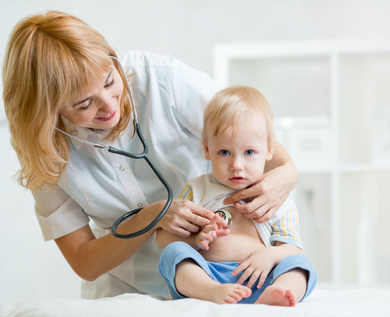
Symptoms of children's diseases
Do not miss the symptoms of the disease in the child. The reason for the appointment to the pediatrician should be the appearance of obvious symptoms of diseases, but also any deviations from the norm of the child:
- causeless anxiety and tearfulness;
- passivity, lethargy, drowsiness;
- temperature increase;
- the appearance of a rash on the skin;
- runny nose, discharge and nasal congestion;
- complaints of swallowing disorders and sore throat;
- reduced tolerance of physical exertion, dizziness, pale skin, blue lips, fingertips;
- decreased appetite;
- increased gas formation, intolerance of certain products;
- urinary disturbances, anxiety and crying during urination.
Diagnosis of children's diseases
Diagnosis begins with the collection of anamnesis and a detailed interview of the parents about hereditary diseases, the course of pregnancy, childbirth and the newborn period.
If necessary, additional studies are prescribed: general clinical blood analysis and urine analysis, blood biochemistry and urine biochemistry, analysis of feces and scrapings for enterobiosis, bacteriological, immunological studies and other analyzes necessary for the diagnosis of a specific disease. For example, for the laboratory diagnosis of anemia caused by iron deficiency, a general and biochemical blood test is sufficient.
In the clinic, you can undergo a full range of tests recommended by the doctor. All diagnostic measures are coordinated by your pediatrician. If necessary, doctors of narrow specialties are involved.
Preventive examinations at the pediatrician
The first examination of the baby, as a rule, takes place at home. Subsequent follow-up visits to the clinic (or doctor's home calls) are recommended at least once a month. The pediatrician not only examines the baby himself, but also coordinates the work of other specialists who participate in the examination. He makes an individual disease prevention program, including a vaccination plan.
In the second year of a child's life, preventive examinations are scheduled once every three months, after reaching 2 years of age - once every six months. Preventive examination includes an examination by a pediatrician and specialists of a narrow profile, laboratory tests that allow monitoring the growth and development of the baby.
At the age of three, a large dispensary examination is required before entering kindergarten. After the dispensation, parents are given a medical card for the kindergarten and a card of preventive vaccinations, which contains information about all vaccinations.
Similar examinations are carried out at the age of 5-6, when a medical card is drawn up for the school.


